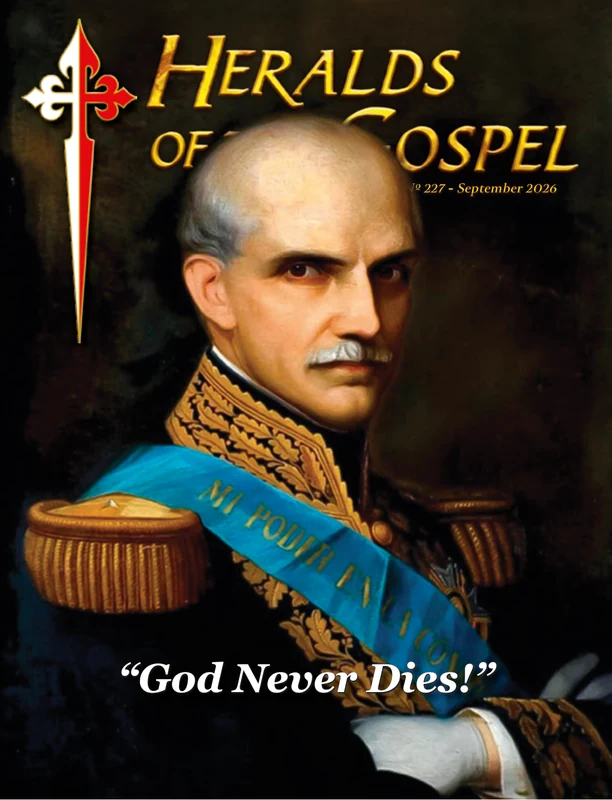
 Heralds of the Gospel Magazine, Vol. 20, nº 227, September 2026
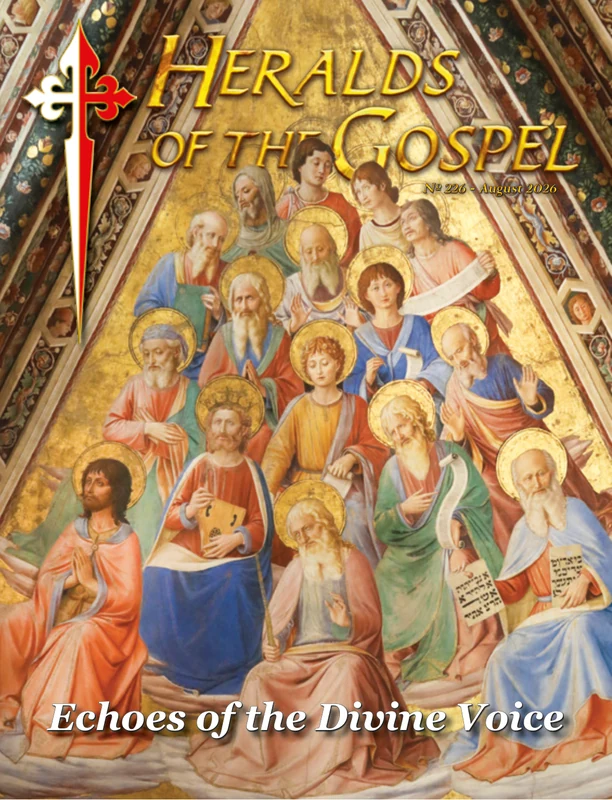 Heralds of the Gospel Magazine, Vol. 20, nº 226, August 2026
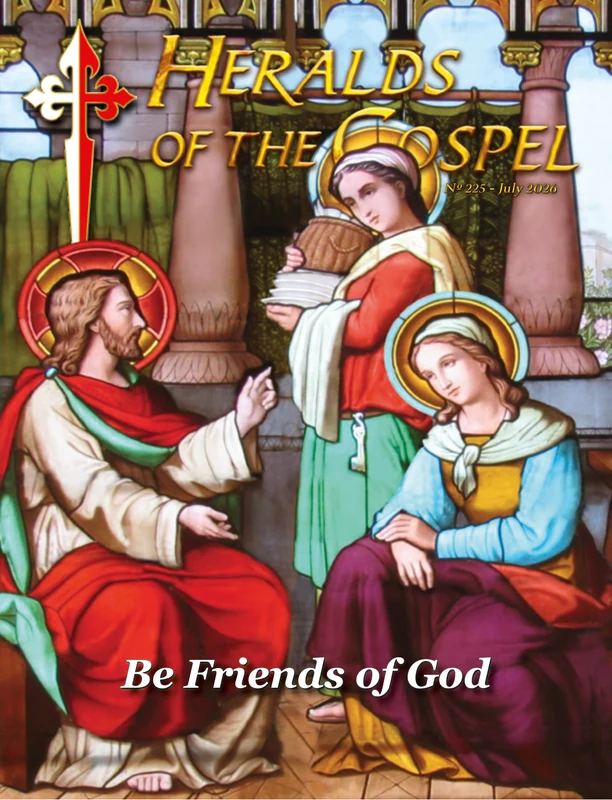 Heralds of the Gospel Magazine, Vol. 20, nº 225, July 2026
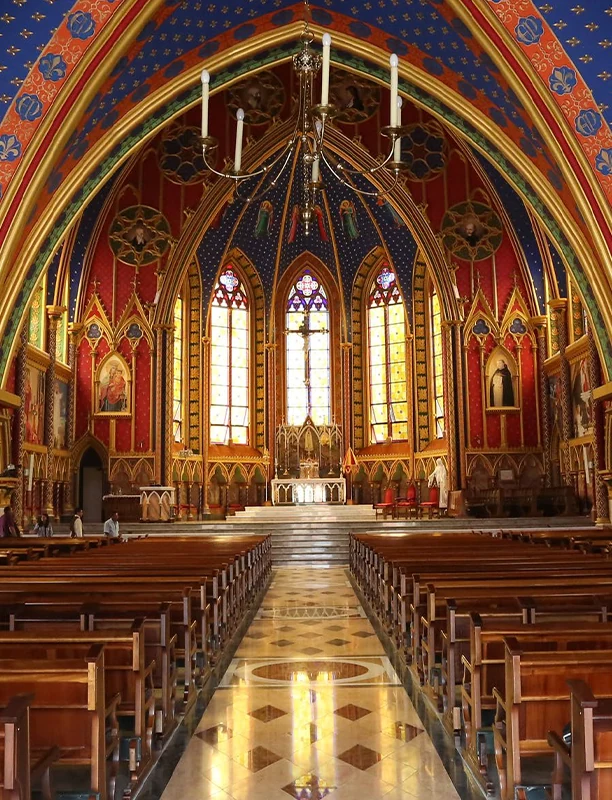 Who are the Heralds of the Gospel?
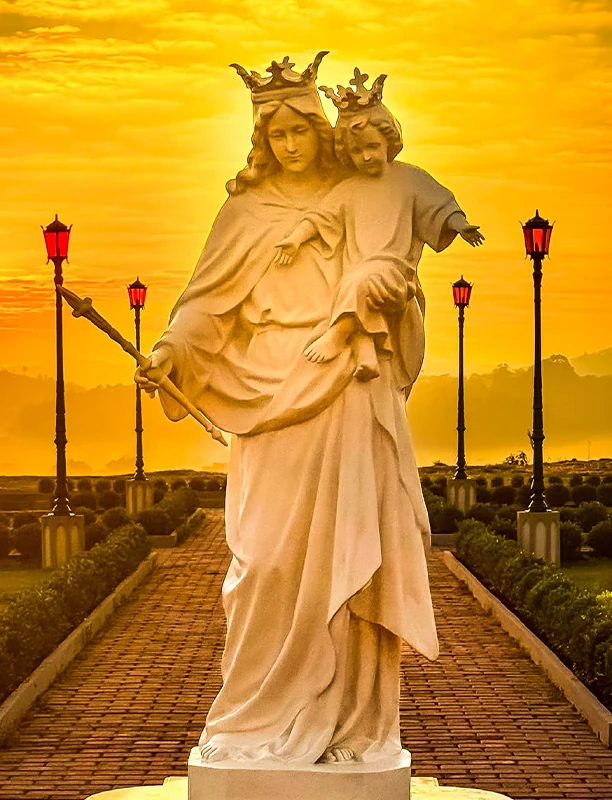 Help of Christians
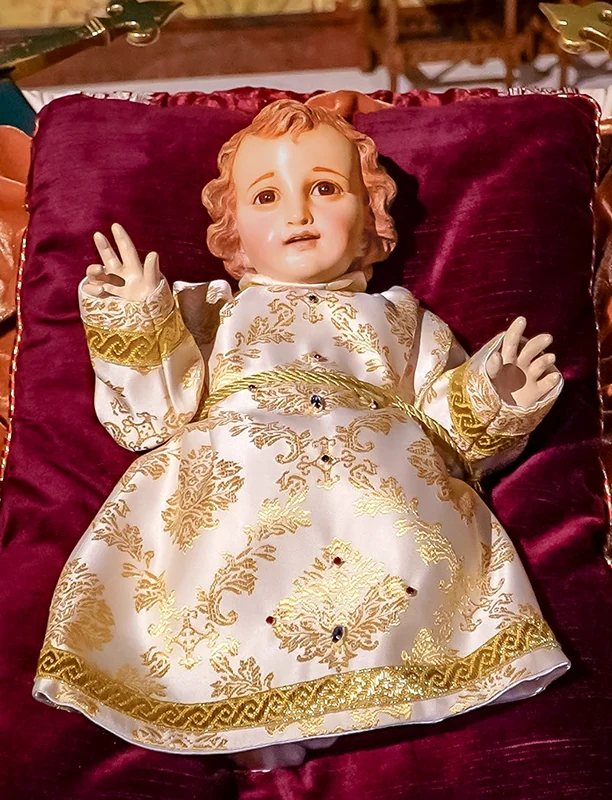 Christmas Carols





In the year 64, the first great persecution against Christians broke out.
Anyone who professed faith in Our Lord Jesus Christ could be thrown to the wild beasts in arenas, burned alive in imperial gardens, murdered in the streets, or crucified for the amusement of the populace.
The Church then took refuge in the bowels of the earth, in catacombs dug for corpses and for everything that had to be hidden from the light of day.
But, after all, these were the only relatively safe places where the faithful could bury martyrs and gather to pray.
In these dark underground chambers, Catholics attended the renewal of the Holy Sacrifice illuminated by oil lamps and candles.
The illumination used to be placed on the ground, at the foot of the altar, this liturgical practice probably extending throughout the High Middle Ages, when, around the first half of the 11th century, candelabras began to be placed on the sacred table itself.
To this day, it is prescribed that at least two candles illuminate the altar during Mass, and this can increase to seven if the diocesan bishop is the celebrant.[1]
In addition to symbolizing Christ, Light of the world, and the fire of charity that He kindles in us by His grace, the flames recall that the Holy Church dawned underground, among the bodies of the martyrs and the fervent faith of persecuted Catholics.