 Heralds of the Gospel Magazine, Vol. 20, nº 227, September 2026
 Heralds of the Gospel Magazine, Vol. 20, nº 226, August 2026
 Heralds of the Gospel Magazine, Vol. 20, nº 225, July 2026
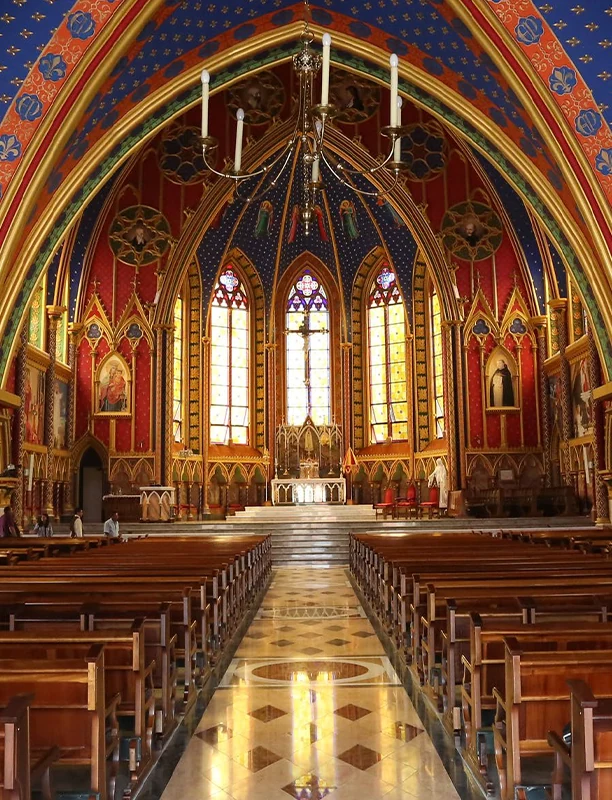 Who are the Heralds of the Gospel?
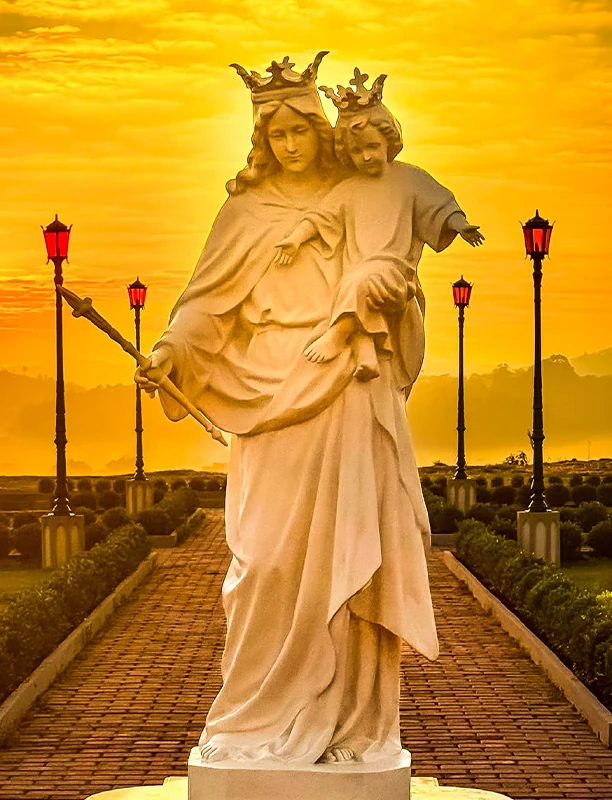 Help of Christians
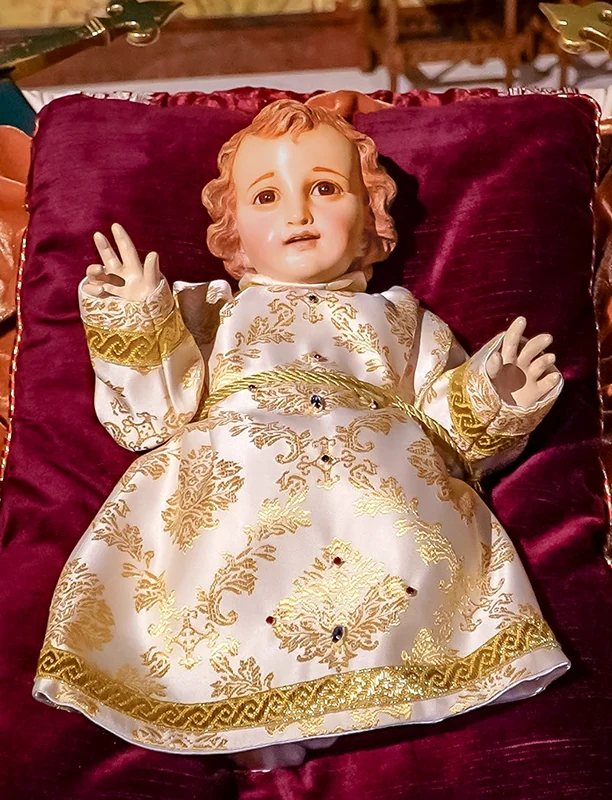 Christmas Carols






The mountain of Carmel
Elevated sites have always played an important role in salvation history. The Holy Scriptures show us this by mentioning Mount Sinai as the sacred place of Revelation and the Law, or Mount Zion, where the Lord God established his Sanctuary. The same is true of Carmel. This mountain is located in Israel, overlooking the Mediterranean Sea to the south of the Bay of Haifa. The mountain is covered in leafy vegetation, which gives it the name Karmel, which in Hebrew means vineyard or garden,2 or, as Dom Guéranger proposes, “plantation of the Lord.”3 In Elijah’s time, access to Mount Carmel was extremely difficult, which favoured solitude and seclusion. Centuries later, St. John of the Cross would relate it to the ascent of a soul in the spiritual life when he wrote his famous work Ascent of Mount Carmel. All these characteristics probably led the Thesbite to choose this place to form a community of disciples who were to be called “sons of the prophets” (2 Kgs 2:3).
The lineage of the prophets
Elijah spent his days exercising God’s vengeance against the evil that was spreading in Israel and reconciling the heart of father with son (cf. Sir 48:1-10). Blessed are those who knew him and were honoured by his friendship! (cf. Sir 48:11). However, the Lord of Hosts, for whose sake the prophet burned with zeal, took him to himself in the presence of Elisha, who remained on earth as the holder of his master’s spirit and prophetism. The sons of the prophets gathered around Elisha and, recognizing in him the spirit of Elijah (cf. 2 Kgs 2:15), chose him as the first among them. Elisha then became for that prophetic nucleus and its posterity what Peter would be for the Church4: possessing a primacy like Elijah, “nothing was too hard for him” (Sir 48:13a). Having received his master’s mantle, he perpetuated prophecy on earth and “when he was dead his body prophesied” (Sir 48:13b).The origins of the Order of Carmel
As early as the time of Elisha, the sons of the prophets built a dwelling on Carmel so that they could live together (cf. 2 Kgs 6:1-7), retired as hermits. From then on, the Carmelite tradition is full of mystery. How did the existence of this elitist branch continue to develop until the coming of Our Lord Jesus Christ? Did they give rise to other forms of life, such as the Essenes? Did they know, perhaps by revelation, that the time of the Messiah had come? Little is known about this… One beautiful tradition says that the spiritual sons of Elijah and Elisha became Christians during the first preaching of the Apostles, at which time they met the Blessed Virgin Mary, whose coming their ancestors had prophesied on the mountain of Carmel. For this reason, they returned with greater fervour to the holy mountain and built a chapel to Our Lady in the same place where Elijah had seen the little cloud. This gave them the title of Brothers of the Blessed Virgin Mary of Mount Carmel.5 Owing to the fact that they lived only on that elevation, these hermits were unknown in the West until the 12th century. At that time, due to the formation of the Latin Kingdom of Jerusalem which began with the Crusades, they were joined by some Europeans. It was then that St. Berthold of Calabria was elected as the first Prior General of the Carmelites, by mandate of the pontifical legate Aimeric Malafaida, and the solitaries of Carmel began to acquire the conventual customs already established in the West.6The breath of grace: from East to West
Meanwhile, a new form of religious life was emerging in medieval Europe: the Mendicant Orders. Franciscan and Dominican friars were attracting vocations everywhere. At the same time, in the East, Saracen invasions threatened the lives of Christians and the hermits of Carmel were forced to abandon that sacred place, the cradle of prophetism and of their vocation. Providence, however, had a design in allowing such vicissitudes: the spread of Carmel throughout the West! Thus, in 1238, the first Carmelite monks arrived in Sicily, Cyprus and Spain.7 However, such was the number of mendicant religious in those regions that it was routine to find two friars fulfilling their evangelical ideal by going from house to house asking for alms or food, and they were always generously answered. However, men wearing different habits began to appear, causing something of a stir: a brown tunic with a drawstring at the waist and a banded cloak, that is, white with beige or brown stripes. When asked the name of their Order or who their founder was, the monks replied, according to the rule, that they were the successors of Elijah and Elisha and that they came from Mount Carmel…8The habit is reformed and the scapular appears
Thus began the Carmelite epic in Western Christendom. European customs forced them to change their cape for a white one, as it remains today. But the Blessed Virgin still wanted to confirm her predilection for her Carmelite sons.
St. Elijah, St. John the Baptist, St. Simon Stock and St. John of the Cross
Where is Elijah?
Our Lord Jesus Christ came to fulfil the law and the prophets, being himself the Law and Prophecy fulfilled. His words, however, are also shrouded in the mysteries of prophetism… The Transfiguration had just taken place. Astonished, the Apostles Peter, James and John had contemplated Moses and Elijah enveloped in glory, conversing with the Master. The disciples, gathered around Him, then heard these sublime words: “Elijah indeed shall come, and restore all things” (Mt 17:11). In fact, the spirit of Elijah has animated many souls throughout the history of the Church, and the manifestations of his prophetism have gleamed with ever-renewed hues in his spiritual children. The Baptist, pointed out by the Redeemer himself as a new Elijah (cf. Mt 11:14), had already caused astonishment in Israel. And in the era of the New Law, how can we fail to see him in the mystical raptures of a St. John of the Cross or in the fiery prophecies of a Blessed Francisco Palau? Humanity has also discerned the glory of the Thesbite in the incomparable gest of St. Simon Stock, in the heroic military deeds of St. Nuno Alvares Pereira and in the miraculous protection of Anne of St. Bartholomew in confronting the Calvinist heretics. The Order has received countless graces from Elijah’s loftly union with God. Undoubtedly, mystics such as St. Teresa Margaret Redi, St. Mary Magdalene of Pazzi and St. Elizabeth of the Trinity are but scintillations of that same prophetic Elijah who on the peaks of Horeb ardently declared: “With zeal have I been zealous for the Lord God of hosts” (1 Kings 19:14)!
St. Nuno Alvares Pereira, St. Teresa of Avila, Blessed Anne of St. Bartholomew and St. Therese of the Child Jesus
Notes
1 CICCONETTI, O Carm, Carlo. El profeta Eliseo, primogénito y modelo de los carmelitas. In: VV.AA. Eliseo, o el manto de Elías. Burgos: Monte Carmelo, 2000, p.74.
2 Cf. VÁZQUEZ ALLEGUE, Jaime. כרמל. In: Diccionario bíblico hebreo-español español-hebreo. 2.ed. Estella: Verbo Divino, 2003, p.113; POLENTINOS, OSA, Valentín. Carmelo. In: DIEZ MACHO, MSC, Alejandro; BARTINA, SJ, Sebastián (Dir.). Enciclopedia de la Biblia. 2.ed. Barcelona: Garriga, 1969, v.II, col.149.
3 GUÉRANGER, OSB, Prosper. L’Année Liturgique. Le temps après la Pentecote. 10.ed. Paris: H. Oudin, 1913, t.IV, p.156.
4 Cf. CICCONETTI, op. cit., p.70.
5 Cf. GUÉRANGER, op. cit., p.149.
6 Idem, p.149-150.
7 Cf. ORTEGA, OCD, Pedro. Historia del Carmelo Teresiano. 3.ed. Burgos: Monte Carmelo, 2010, p.33.
8 The first Carmelite rule was written by St. Albert, Patriarch of Jerusalem, in the 12th century, when St. Berthold was already Prior General of Carmel. However, with the move to the West, it was necessary to reform the primitive rule, in which this detail was added about the request for alms and the answer to be given to questions about the Order.