 Heralds of the Gospel Magazine, Vol. 20, nº 227, September 2026
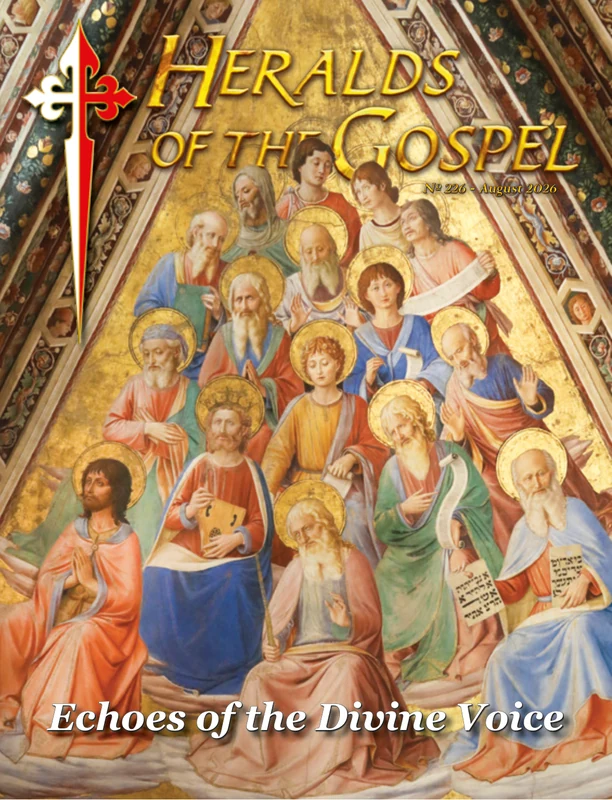 Heralds of the Gospel Magazine, Vol. 20, nº 226, August 2026
 Heralds of the Gospel Magazine, Vol. 20, nº 225, July 2026
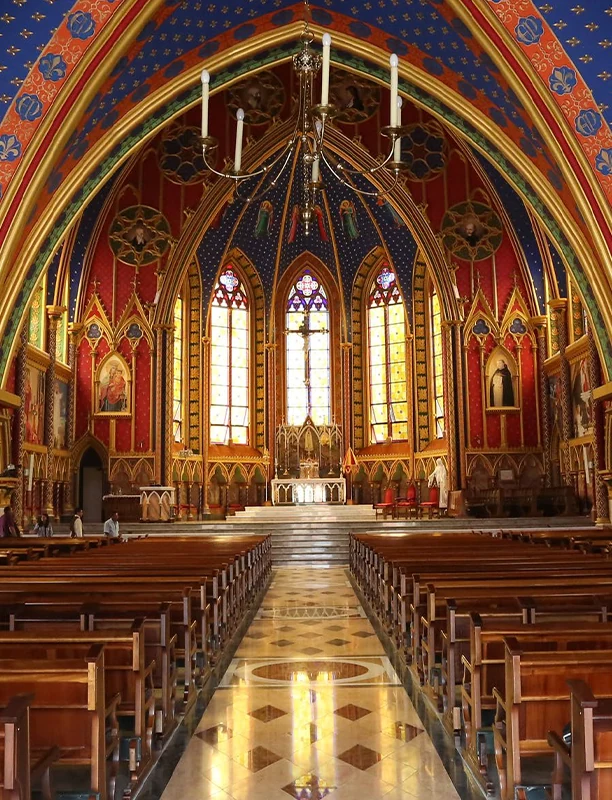 Who are the Heralds of the Gospel?
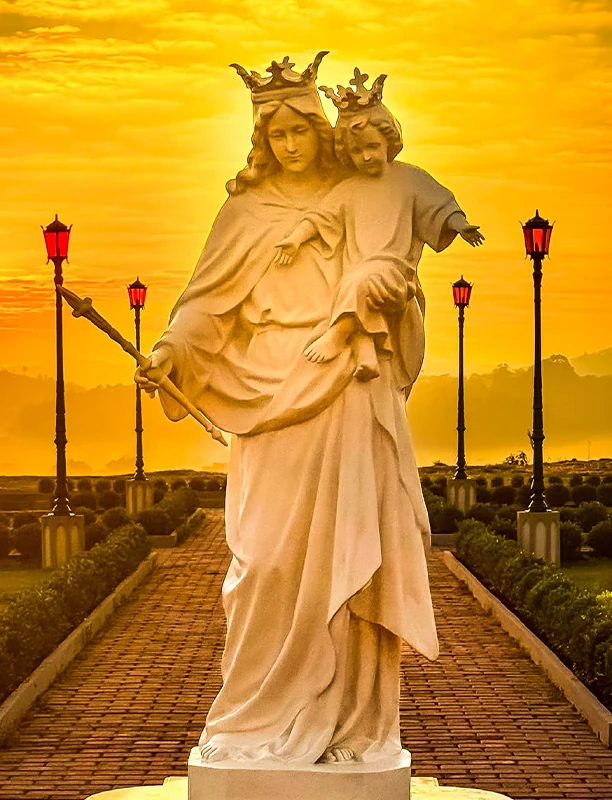 Help of Christians
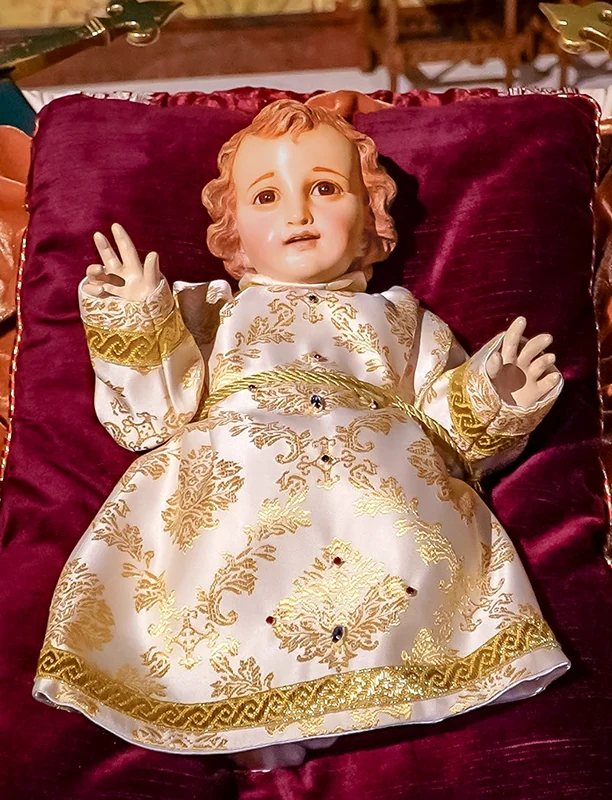 Christmas Carols









Intelligence and will united in contemplation
The act of contemplating is proper to the intellect since it involves the object of the understanding, which is truth. However, St. Thomas shows5 that this act cannot be said to belong to the intellect alone, since the impetus to perform this operation belongs to the will, which moves all the other faculties, including the intellect. With divine wisdom, the Saviour expressed this reality when He said: “For where your treasure is, there will your heart be also” (Mt 6:21). In fact, the man who finds the “treasure hidden” (Mt 13:44) of the knowledge of God is moved by love to abandon everything in order to obtain it; the heart becomes the great mover of his actions to attain the good sought by the intellect. Thus, since delight is experienced when the object of love is attained, the end of the contemplative life consists in the delight of knowing the desired object. With each new level of knowledge, love becomes more intense, since knowledge produces love, and love, in turn, longs to know more and more.Cogitation, meditation and contemplation
We should also consider that man arrives at the intuition of truth in a progressive way, through many acts. Thus, although the contemplative life is consummated in a single act, namely, knowledge and love of the truth, it comprises multiple acts that prepare for this supreme action. Following the teaching of Richard of St. Victor, St. Thomas6 differentiates between the terms cogitation, meditation and contemplation throughout this process. Cogitation is the examination of the many elements from which one intends to extract a simple truth. This term can include both the sensitive perceptions by which we know certain effects, and the imagination or the discourse of reason about the different signs that lead to the knowledge of the desired truth. Meditation, on the other hand, is the process of reason which starts from principles in order to arrive at the consideration of a determined truth; and contemplation, in itself, is the simple intuition of the truth. Again according to Aquinas, man arrives at the contemplation of truth in two ways: by a favour received or an effort made. Regarding the first, it he notes that it can come from human sources – either through oral or written teaching, which requires listening or reading – or it can have a supernatural origin. When the gift comes from God, the involvement of prayer is necessary, which is why the Psalmist declares that he raises his prayer to the Lord from the dawn (cf. Ps 88:13). In the second way, in which man applies personal effort to achieve contemplation, meditation becomes necessary.The invisible reality contemplated in the divine effects
The contemplative life thus comprises two elements: the principal and the secondary. The first is the contemplatio of divine truth, the end of all human actions and the fullness of eternal joy. However, this contemplation will only be perfect in the life to come, when we shall see God face to face. Adoration of the Blessed Sacrament - Tabor Formation House, Caieiras (Brazil)
The ultimate goal: happiness
Although perfect contemplatio is enjoyed in only eternity, the contemplation of God through His creatures already affords a beginning of beatitude which, having started in this life, reaches its fullness in the next. In this sense, St. Thomas asserts that it is impossible for man’s happiness – his perfect good, which, being the final end, appeases the desire – to be found in created goods. For the object of the will, which moves man in his desire to obtain it, is the universal good, and the object of the intellect is universal truth. Therefore, nothing can quiet man’s desire except the universal good, which is not found in anything created, but in God. The Angelic Doctor then concludes that “final and perfect happiness can consist in nothing else but the vision of the Divine Essence.”8 Moreover, the perfection of intelligence is measured by the knowledge of the essence of a thing. If, however, the intellect knows the essence of an effect, but is not able to know the essence of the cause, it cannot be said to have known it entirely. Now if the human intellect, knowing the essence of some created effect, succeed in knowing no more of God than that He exists, its perfection has not yet absolutely reached the first cause, and in it remains the natural desire to investigate it. Therefore, man does not yet enjoy the fullness of happiness, nor will he, until attaining perfection in the vision and knowledge of God.9 St. Thomas also states, based on St. Augustine, that no one can see God during this life, while subject to the bodily senses. To be raised to the vision of the divine essence, man must in some way die to this world, either by separating himself totally from the body or by dispensing with the carnal senses. Indeed, one can be in the present life in two ways: in an actual way, when one makes actual use of the bodily senses, or in a potential way, when the soul, although united to the mortal body as form, does not make use of the bodily senses nor even of the imagination. In the first case, contemplation can never attain to the vision of the divine essence; but in the second, yes, and this is what happens in rapture.10 But pure theory, although beautiful and sublime, can only be assimilated if translated into concrete examples, capable of enlightening men on the elevated path which, through contemplation, leads to the Creator.Elevated, ample and perfect: the Johannine “contemplatio”
With the genius of a great theologian and the admiration of a Saint, Aquinas presents the Beloved Disciple as a model of contemplation. Already in the prologue to his work Lectura super Ioannem, in which he comments in a masterly way on the Fourth Gospel, he points out the high degree of contemplation possessed by the Virgin Apostle, emphasizing that “while the other Evangelists dealt mainly with the mysteries of Christ’s humanity, John shows especially and particularly in his Gospel the divinity of Christ, […] without thereby neglecting the mysteries of His humanity.”11 Vision of St. John the Evangelist on the Island of Patmos - Diocesan Museum of Santarém (Portugal)
The Reverse Side of Heaven
It is common, on particularly beautiful and pleasant evenings, to go out onto the balcony of the house to observe the vastness of the firmament filled with stars. In the sensitive human spirit, this contemplation causes true amazement! […] Now, the constellations were thus arranged by God and, like all of His works, they are clothed with immense pulchritude. We should understand that they speak to us of the Creator and to a certain extent represent the “underside of the carpet” for those who do not know the all-encompassing vision that the Most High has of the starry heavens and do not consider them according to a certain order that is incomprehensible to us from earth. The Eternal Lord, in order to instil in us the desire to share in His wisdom, constituted the universe in this way, as if to say to us: “My children of all times, this splendour is the reverse side of the carpet of my dwelling place. Rise beyond, and you will find a mysterious and unfathomable order which you cannot now glimpse!” Thus, there is reserved for us what is called the beatitudo incomprensibilitatis, the beatitude of those who do not understand, but, because they have a respectful and hierarchical soul, are delighted to admire and contemplate: “It is incomprehensible to me; yet God understands. O wonder!” Let us realize, then, that the best part will not be when we see and understand the order of the stars, but when we contemplate God face to face, and perceive in Him the unfathomable expanse of the stellar order. Then we will also understand how worthwhile it was to live, so as to love and adore Him, to serve and imitate Him. We shall have sought to know that order in the highest sense of the word, that is, in the final analysis, the divine government exercised by the Creator of all things visible and invisible, symbols of himself, the Perfection of perfections!CORRÊA DE OLIVEIRA, Plinio. Bem-aventurança da admiração [Beatitude of Admiration]. In: Dr. Plinio. São Paulo. Year IX. N.94 (Jan., 2006); p.4
Notes
1 Cf. CONTEMPLATION. In: BERARDINO, Angelo Di (Org.). Dicionário patrístico e de antiguidades cristãs. Petrópolis: Vozes, 2002, p.337.
2 ST. THOMAS AQUINAS. Summa Theologiæ. II-II, q.180, a.4.
3 Cf. Idem, a.1.
4 Cf. ST. THOMAS AQUINAS. Compendium Theologiæ. L.I, c.104.
5 Cf. ST. THOMAS AQUINAS. Summa Theologiæ. II-II, q.180, a.1.
6 Cf. Idem, a.3.
7 Cf. Idem, a.4.
8 Idem, I-II, q.3, a.8.
9 Cf. Idem, ibidem.
10 Cf. Idem, II-II, q.180, a.5.
11 ST.. THOMAS AQUINAS. Lectura super Ioannem. Prologus, n.10.
12 Idem, n.2.
13 Idem, n.1.
14 Idem, n.8.