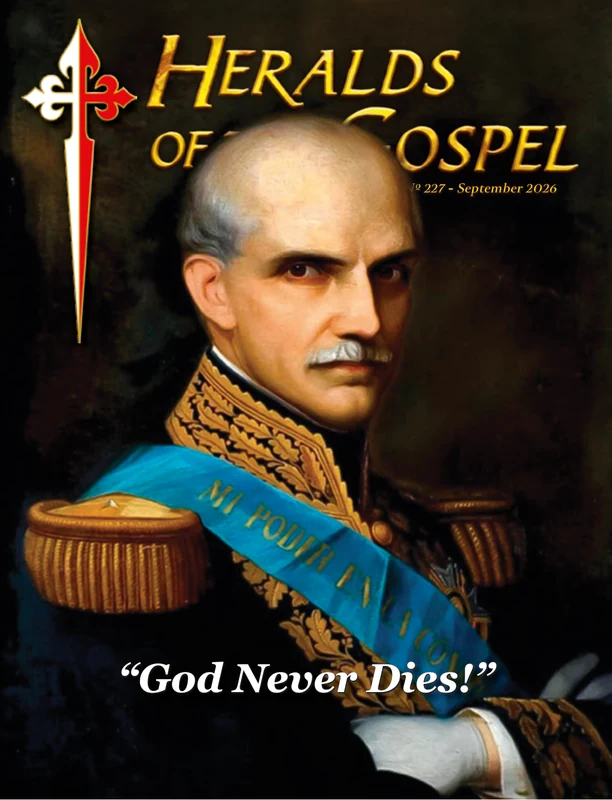
 Heralds of the Gospel Magazine, Vol. 20, nº 227, September 2026
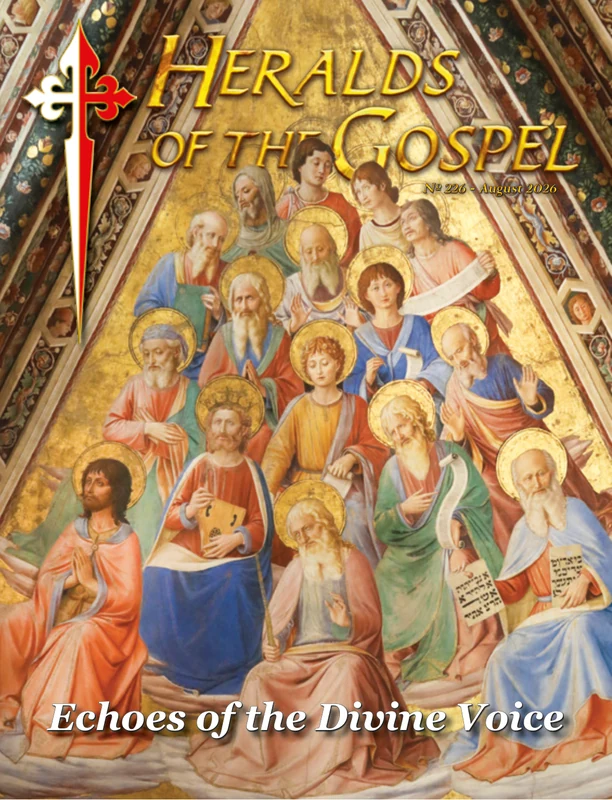 Heralds of the Gospel Magazine, Vol. 20, nº 226, August 2026
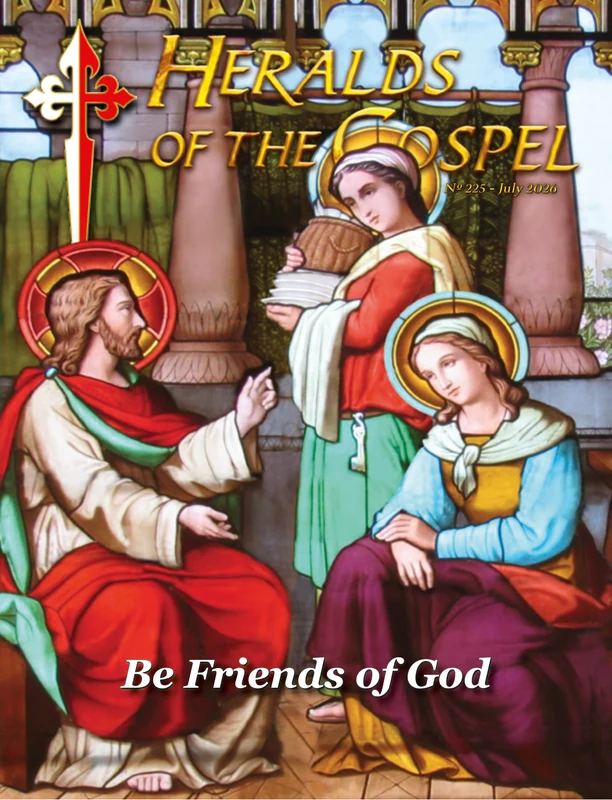 Heralds of the Gospel Magazine, Vol. 20, nº 225, July 2026
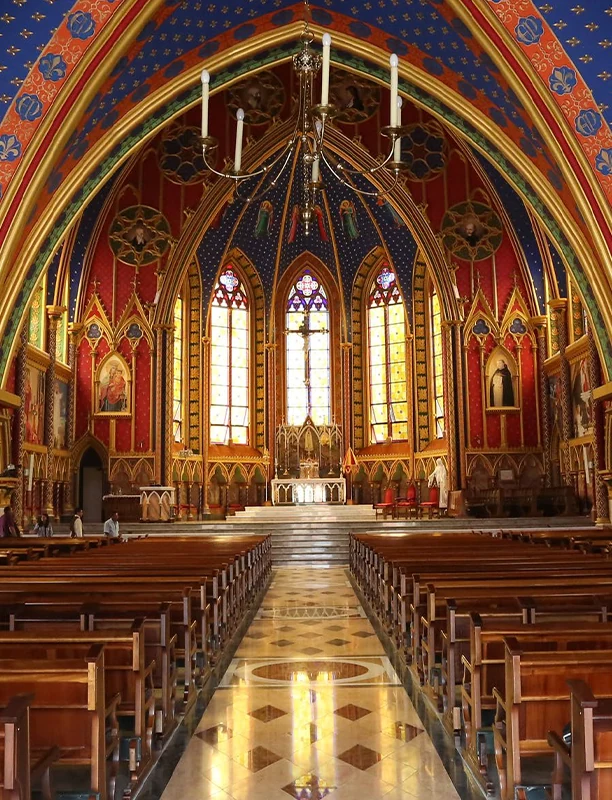 Who are the Heralds of the Gospel?
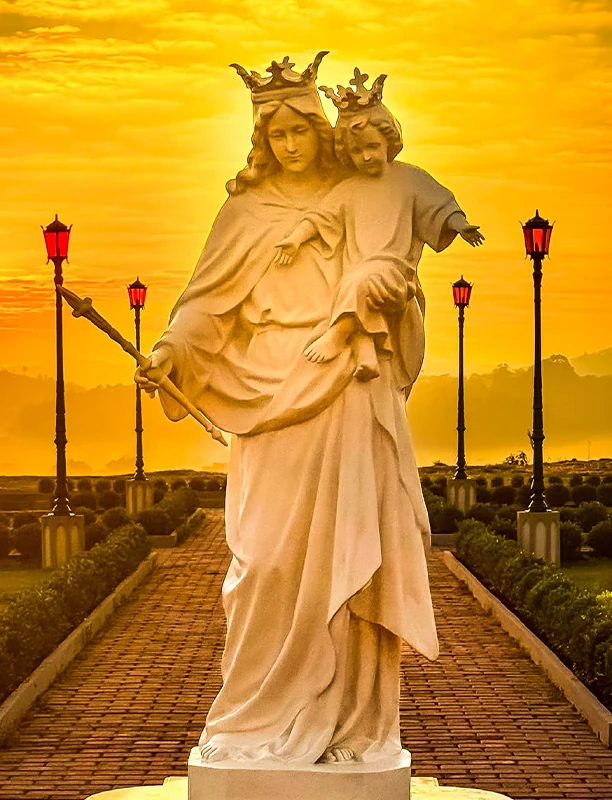 Help of Christians
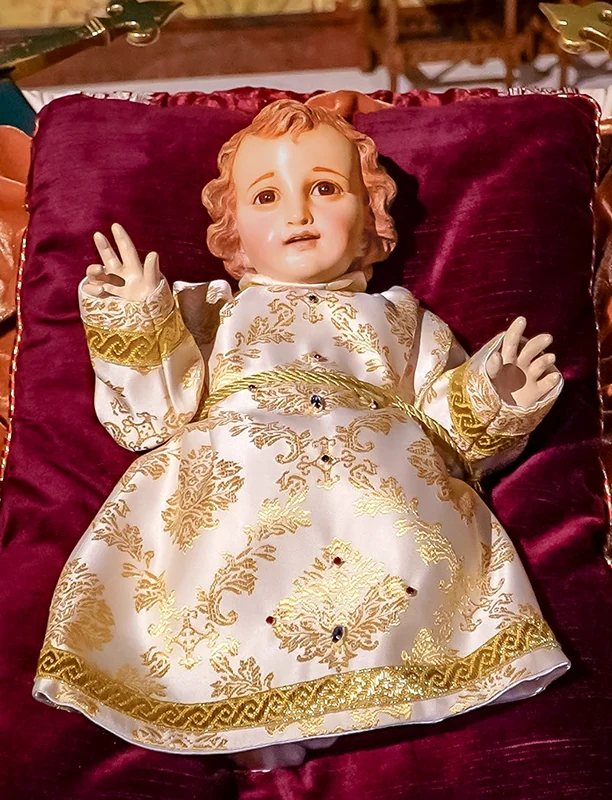 Christmas Carols






A jewel of Christendom
“Among the many jewels that God gathered in Spain during the 16th century, we hold as one of the most excellent the Venerable Maria de Jesus,”1 wrote a biographer about our blessed, who on August 18, 1560, was born to a noble Spanish family in the village of Tartanedo. Seven days after her birth, the child was taken by her parents, the nobles Don Antonio López de Rivas and Elvira Martínez, to the Church of St. Bartholomew to be baptized and given the name Maria. From a very early age she stood out for her virtues, candour and innocence. She always showed a deep devotion to Our Lady, which led to the innocent custom of playing with her dolls by dressing them up as the Queen of Heaven. She was only four years old when God asked of her a great sacrifice: the death of her father. Before he expired, Don Antonio called her to him and, giving his blessing, bade her farewell with these words: “My daughter, I die; but God will be your Father.”2“I want you as my daughter”
Once, when Maria was playing at five years old, tossing a piece of fruit into the air on the banks of the Gallo River, her “toy” accidentally slipped from her hands and fell into the river. With the intention of retrieving it, she immediately jumped into the water, without fear of drowning. All those who witnessed the episode thought that the little girl would die. At that moment Our Lady appeared and, taking her by the hand, carried her across the water until she was at the top of a hill situated five kilometres from where they were standing. In that circumstance the Blessed Virgin showed the young Maria the path she should follow. “I want you as my daughter,”3 She said to the child. This call, however, would take several years to come to fruition, and perhaps in a way that she did not suspect.The spiritual struggle to fulfil her vocation
When she was six or seven years old, her mother decided to remarry, and she sent the child to Molina de Aragon to live with her grandparents. There, it was not long before the outstanding qualities with which God had adorned her body and soul began to blossom, to the admiration of all. Beautiful in appearance, discreet in her shrewdness, kind and friendly, the young woman never dwelt in useless self-contemplation. On the contrary, she knew how to enhance her beauty by cladding it in modesty and she made her talents shine with the light of prayer, to the exercise of which she faithfully devoted herself. Nevertheless, one’s enemies are often those of one’s own household, as the Saviour announced (cf. Mt 10:36), and in her life it was no different. Observing their granddaughter’s qualities and the flattery she garnered, her grandparents hastened to seek suitors for marriage and succeeded in making her indulge in the adornments and vanities common to girls of her age. A providential fact removed her from these dangers. When she was about sixteen years old, she came into contact with Fr. Antonio de Castro, a Jesuit and a great orator. On noting Maria’s virtues, the priest advised her to become a Discalced Carmelite in the monastery of Toledo, recently founded by St. Teresa of Avila. But the laxity to which she had given herself over had led her so far from her vocation that she would not listen to her confessor’s advice, replying that there was no way she could do so. God, however, never allows Himself to be defeated when it is a matter of winning over a beloved soul, and would not permit her to escape so easily… Struggling internally with the decision she should take regarding her life – to follow the religious life or to marry – she decided to entrust the matter to Heaven. As she was praying before a statue of Our Lord carrying the Cross venerated in the oratory of her house, she heard Him say: “I want you to be a Discalced Carmelite.”4 She did not believe what she had heard, preferring to think it was an illusion. Her conscience, however, gave her no respite. Such was her resistance that, hearing the voice of the Redeemer once more, she still would not heed Him. Our Lord then addressed her a yet third time: “I want you to be My spouse in the Discalced Carmelites.”5 Finally Maria allowed herself to be conquered! She immediately informed her confessor of her decision to become a nun and wrote a letter to the reformer of Carmel, St. Teresa of Jesus.Entry into Carmel
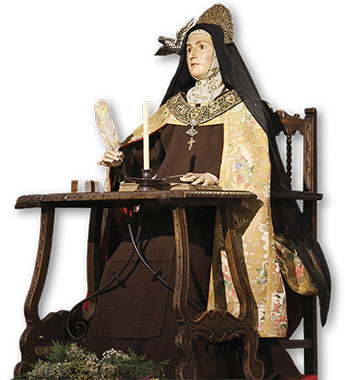 St. Teresa of Avila - Convent of St. Joseph, Toledo (Spain)
Her relationship with St. Teresa
It is said that St. Teresa used to consult her very often in her difficulties, for, at a mere twenty years of age, Sr. Maria de Jesus knew how to answer the questions she was asked with intelligence and insight. St. Teresa liked the young woman’s advice so much that the great Foundress often preferred her opinions to her own. On one occasion, when the Saint asked the nun for advice, she was so pleased with her opinion that she replied, “It must be so, for you, my Letradillo, have said so.”7 On one occasion, after the death of the Foundress, she appeared to our Saint while she was praying for the future of the Discalced Carmelites, and told her not to fear, for God Himself was watching over the Order, as it had been raised up on her blood, which so greatly pleased Him. In another circumstance, Sr. Maria de Jesus asked Our Lord to give her the virtues of the Saint of Avila, who then appeared to her affirming that the Most High would grant them to whomever was ready to receive them.8Period as prioress marked by trial
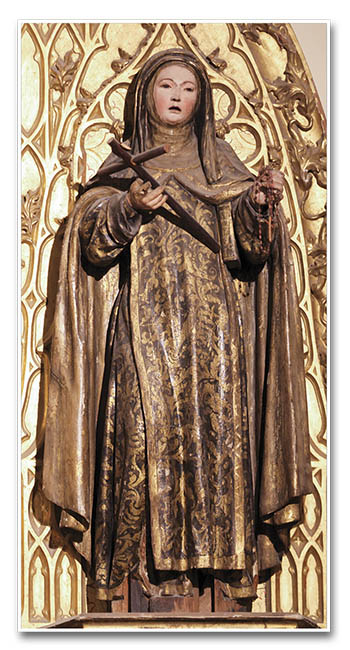 Blessed Maria de Jesus - Church of the Holy Angel, Seville (Spain)
Mystical graces and contact with the supernatural
Once, after receiving Holy Communion on the feast of the Ascension, she saw Our Lord, full of glory and majesty, ascending to Heaven together with a multitude of Angels. Realizing that she was still on this earth, she protested: “Lord, do not leave us orphans!” And Jesus answered her: “I do not leave you orphans, for I remain in the Sacrament of the Eucharist. See Me in it and see yourself within my Heart.” On another occasion, on the Vigil of Pentecost, she saw the three Persons of the Most Holy Trinity in the Holy Eucharist. At that moment, the Divine Master showed her the wounds of His side and, giving her to understand the value and efficacy of His Blood, said: “My daughter, this Blood and my Heart are yours. Make it your dwelling place forever, and be immersed in my Blood. Know that my Blood burns and enkindles the hearts that cast themselves into it.”9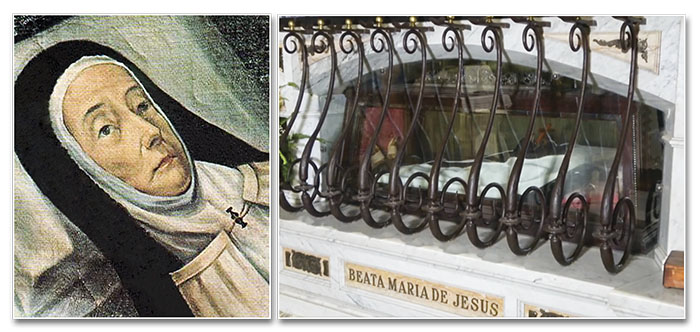 At left, Blessed Maria de Jesus portrayed on her deathbed; at right, her incorrupt body, which is found at the main altar of the Convent of St. Joseph, Toledo (Spain)
“I have fought the good fight”
At the age of eighty, after a life of struggles and tribulations, Mother Maria de Jesus died in the odour of sanctity on September 13, 1640, surrounded by those she esteemed as daughters, who buried her body in their convent. Exhumed four times over the years, she was found incorrupt, according to the records, and exuding a pleasant perfume that spread throughout the monastery. This is how God rewards those who, sparing no effort, give themselves unreservedly to Him. They can say with St. Paul: “I have fought the good fight, I have finished the race, I have kept the faith. Henceforth there is laid up for me the crown of righteousness, which the Lord, the righteous Judge, will award to me” (2 Tm 4:7-8). ◊Notes
1 EVARISTO DE LA VIRGEN DEL CARMEN, OCD. El letradillo de Santa Teresa. Biografía de la Madre María de Jesus. Toledo: Sebastián Rodríguez, 1926, p.29.
2 Idem, p.32.
3 Idem, p.34.
4 Idem, p.40.
5 Idem, p.41.
6 Idem, p.45.
7 Idem, p.71. The word letradillo, from letrado, used by St. Teresa as a nickname for Blessed Maria de Jesus, denotes erudition, and seems to refer, in an affectionate and quaint manner, to her condition as a particularly enlightened person.
8 Cf. JERÓNIMO DE LA MADRE DE DIOS, OCD. Peregrinación de Anastasio. In: Obras. Burgos: El Monte Carmelo, 1933, t.III, p.253.
9 EVARISTO DE LA VIRGEN DEL CARMEN, op. cit., p.196.