 Heralds of the Gospel Magazine, Vol. 20, nº 227, September 2026
 Heralds of the Gospel Magazine, Vol. 20, nº 226, August 2026
 Heralds of the Gospel Magazine, Vol. 20, nº 225, July 2026
 Who are the Heralds of the Gospel?
 Help of Christians
 Christmas Carols








In Brazil in 1936, the country was “experiencing the Revolution of 1930 and the threat of communism,”1 as the current Bishop of Pesqueira (Pernambuco), Dom José Luiz Ferreira Salles, CSsR, briefly describes. At that time, dangerous bandits roamed the hinterlands of Pernambuco state heading toward Paraíba.
Wherever they passed, they left a trail of the most disgraceful crimes and atrocities. The village of Cimbres, located in the Ororubá mountains and belonging to the same Diocese of Pesqueira, was the setting for some of these events.
It is in this region, hidden in the remote reaches of the Brazilian Northeast, that our story begins…
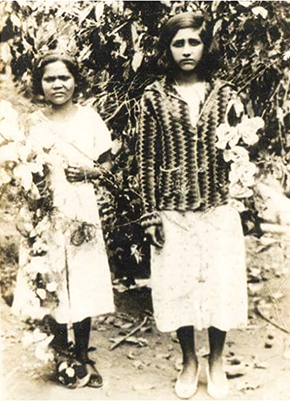
A “Mariophany” in Brazilian lands
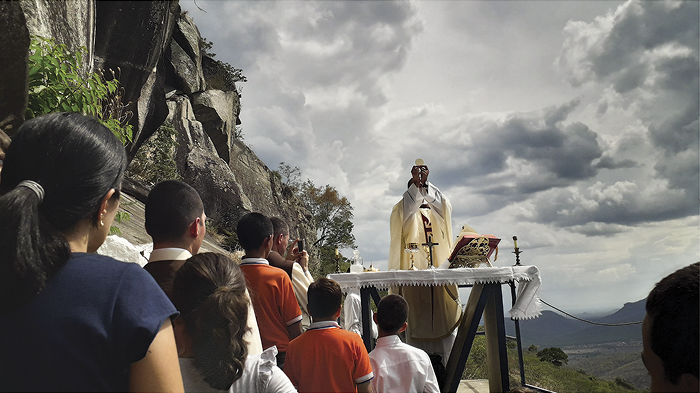
In this area, there was a property called the Guarda. During that fateful time, Mr. Arthur Teixeira de Carvalho, who resided there, used to seek shelter among the large boulders to pray outdoors with his wife, Auta, and all their children, next to a picture of the Blessed Virgin beautifully adorned with flowers, beseeching her maternal protection.
In early June 1936, the outlaws returned to that land, but the family was left unharmed.
On the morning of August 6, when the Feast of the Transfiguration of the Lord was being celebrated throughout the world, Auta asked her thirteen-year-old daughter, Maria da Luz, to go and pick fruit, accompanied by Maria da Conceição, a sixteen-year-old friend who was staying with the family.
Along the way, the girls wondered what they would do if Chief Lampião’s bandits appeared again.
Maria da Luz did not hesitate to afirm that she would do the same as before: she would pray to the good Mother of Heaven, certain that She would defend them. Having said this, she raised her eyes to the rock, drawn by a light of incomparable brightness and beauty.
“It seems that She is there, to protect us now!” – exclaimed the younger girl to her companion, who also saw the luminous figure.
What was it? A new transfiguration, no longer on Mount Tabor, but on the cliffs of Cimbres. Yes, it was a “Mariophany” in Brazilian lands!
The Morning Star had descended from Heaven and, in contact with those young girls, made their souls shine: they formed the “Three Marys,”2 no longer Mary Magdalene or Mary Cleophas, as the Gospels narrate, but rather “Mary of Light” and “Mary of the Conception” 3; the third remained the same, Mary of Nazareth, the Blessed Virgin, who appeared there.
The first to discover what had happened was Auta, who extracted the information from the visionaries and, after an initial moment of incredulity, ended up believing the account.
The same, however, cannot be said of the rest of the family, who argued heatedly with the girls to dissuade them from divulging the apparition.
The news soon spread throughout the region, however, as is often the case, and attempts to silence the events were in vain.
Concerned, Arthur sought the guidance of the local Bishop, Most Rev. Adalberto Accioli, who entrusted his secretary, the German priest Fr. Joseph Kehrle, with investigating the case, a task he carried out with zeal and piety.
The ad hoc investigator Fr. Joseph, along with Friar Estevam Roettger, OFM, later gave a “favourable opinion on the events and attested to their veracity.”4
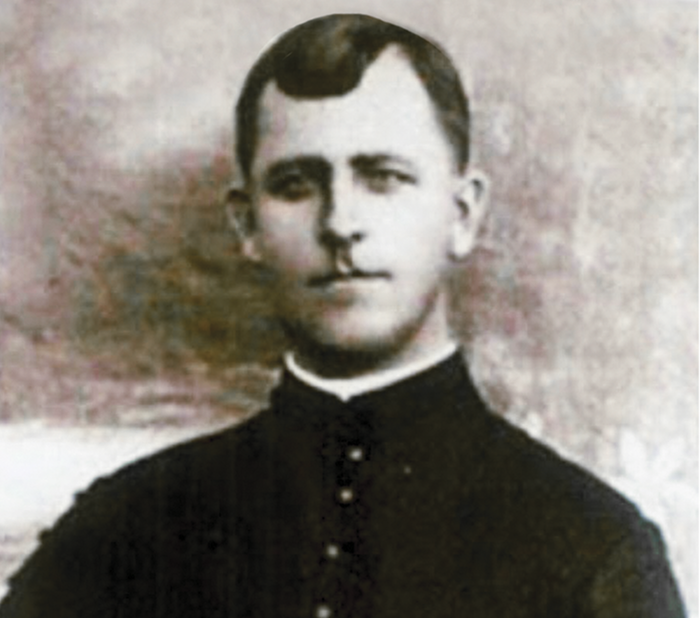
A questioning in German
After conversing at length with Maria da Luz’s father, and questioning the girl herself about what had happened in Cimbres, Fr. Joseph gave Arthur some guidelines and left him a few written questions that the young girl should ask the “Saint,” as they called her.
When asked about her identity, Our Lady replied: “I am Grace.” The apparitions continued throughout the month of August. Fr. Joseph decided to verify the information personally.
Upon arriving at the site of the apparitions on August 20, he told Arthur to go a little further away with Maria da Conceição, while he stayed there with the other girl, so that the distance would only allow them to see, but not to hear each other.
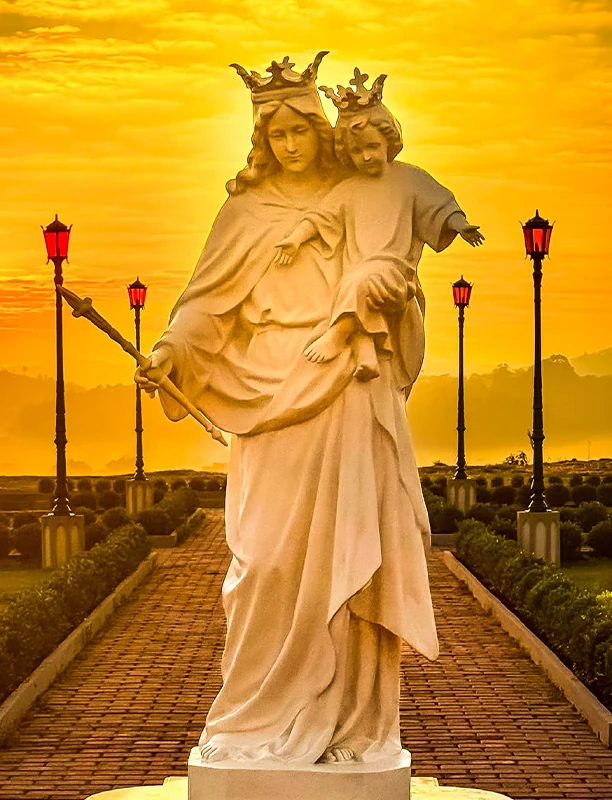
The German priest then asked the girl what she saw. She described the apparition as similar to the image of Our Lady of Mount Carmel, but with a blue mantle and a cream-white dress, in addition to having a sash.
In her left arm, she held a Child, who, in turn, had his little arm around her neck. Both wore beautiful crowns.
The priest signalled to Arthur that the girls should switch positions. While with Maria da Conceição, he pointed to a different spot and stated that her friend had seen the “Image” there – another name they used to refer to Our Lady.
The girl replied, almost crying, that she didn’t see her there, but right in the middle of the rock; in fact, the information coincided. When questioned about the details of the apparition, the young girl described it exactly as her friend had!
At one point, Fr. Joseph asked the father and daughter to come closer and began to ask several questions, such as whether he could speak to Our Lady in a foreign language, to which the Virgin replied affirmatively.
He then began to question her in German, while the girls relayed the answer in Portuguese. Needless to say, Goethe’s language was completely unknown to them; however, all the answers were logical and coherent:
“Is the Image a soul or is it Our Lady?” “I am the Mother of Heaven”.
“Are you Mater Divinæ Gratiæ?” “Yes”.
“What is the name of the Child you hold in your arms?” “Jesus”.
“Why are you here?” “Jesus sent Me here”.
“For what purpose?” “To say: serious times are coming!”
Consistently using this unusual system, the investigator discovered that Our Lady had appeared to warn the nation about Communism, which would enter Brazil if penance was not done.
The consequences would be similar to those of the Spanish Civil War, which began that same year.
Much blood would be shed, but the Church would not be defeated! Our Lady asked that devotion to the Sacred Heart of Jesus and to her be spread.
She wanted the apparitions to be publicized and for preachers to speak of this matter to the sheep of Christ’s flock in the whole country. Finally, She communicated that She wished to be invoked there as Our Lady of Graces.
The priest made it clear to the Blessed Virgin Mary that the authorities would not like that message, nor would they heed it. The Virgin Mary did not reply…
In fact, there was not only scepticism regarding the Guarda case, but also a terrible attempt to silence it, including the use of police forces against those involved. Maria da Luz’s father was even arrested.
Proof of a loving Mother’s zeal
To further confirm the heavenly message, Our Lady caused a miraculous spring to gush forth, in the very first days of the apparitions in Cimbres, just below the rock where She was seen.
To this day, water with healing properties flows from the rock, as promised by the Mother of Heaven.
It is curious that the Virgin Mary wished to appear in the Land of the Holy Cross5, on an obscure rock, to warn of the same thing She had already announced several times in other apparitions, such as in Fatima, for example.
Brazil was born late to the light of Christian Civilization; despite five centuries of existence, it is still a child compared to the great European nations that preceded it in the Faith, lands which shine with the glories of a past full of heroism.
However, is it not true that children need special attention from their Mother?
Cimbres: an isolated case?
In fact, there have been many examples of this maternal care. In the first half of the 20th century, there were reports of several “Mariophanies” on Brazilian soil, alluding or relating to Cimbres.
In the state of Rio Grande do Sul, in a small village near the city of Passo Fundo called Leitão, in 1944 there were more than a dozen apparitions of Our Lady of the Rosary to a twenty-year-old peasant girl.
The Blessed Virgin Mary repeated to her the message of Fatima about her displeasure with immoral fashions and, as at the Guarda, foretold the punishment that was about to befall Brazil if the people did not pray and do penance.
Even more impressive was the answer given by the Virgin of the Rosary to the question about whether She would leave a spring there: “When I appeared in Pernambuco I left a spring in the rock there, but since I was not well received, I left that place!”
It seems unlikely that the humble young girl from Rio Grande do Sul knew about the miraculous spring in Cimbres; not even the priest who questioned her, who happened to be from Pesqueira, knew this detail!6
Near the Guarda site, in Lagadiço, apparitions again occurred in 1937 to four children, at a place now known as the Mount of Our Lady, with messages identical to those recorded by Fr. Kehrle and to those from Rio Grande do Sul.
One of the visionaries, José, twelve years of age, was also at the Guarda site on a pilgrimage with his mother, and said he saw Our Lady at the same time as the two girls, while Maria da Luz was in Lagadiço and saw the Blessed Virgin there.
On this occasion, the kind Mother confirmed her manifestation in both places and said with great affection:
Do you know why I spoke so clearly here in this land? It is because I find very little faith in my people and because I am seeking the conversion of all sinners and the salvation of all my dear Brazilian people!
How aptly these same words could be applied to all nations of the earth! How many countries have not been graced with discreet, yet profound, apparitions, such as those of Cimbres?
On the other hand, how diminished faith is among men… Not only Brazil, but all of humanity needs conversion.
The greatest proof of authenticity
A few years later, Maria da Luz became a nun at the Institute of the Religious of Christian Instruction in Recife, taking the name Sister Adélia.
Thanks to the zeal of these sisters, all of Fr. Joseph Kehrle’s investigative documentation on the apparitions was preserved and, later, organized with commendable diligence and published by the researcher Ana Lígia Lira.7
In 2021, Bishop José Salles issued a judgment on the events at Cimbres. First of all, he guarantees
finding, after careful examination of the existing documentation, that the messages related to the events of Guarda Village are in accordance with the Christian Faith.
From the first investigation, contemporary to the events, and meticulously documented, it is found that the content of the messages does not contradict the truths contained in the Holy Scriptures and in the doctrine of the Holy Roman Catholic Apostolic Church.8
Furthermore, the local Bishop testifies to accounts of graces received and miracles, and a notable increase in the devotion of the faithful to the Mother of God, as well as the proven righteousness of life of both visionaries.
Sister Adélia, who died in 2013, was declared a Servant of God and is currently in the process of beatification.
However, the choice of topic for this article did not arise from reading about the apparitions in Cimbres.
The author of these lines had the opportunity to experience the graces flowing forth in this place when he passed through Pernambuco as a missionary and heard the story from the lips of the inhabitants of the region themselves.
More than any historical or investigative documents, the greatest attestation of the authenticity of these manifestations in the northeastern hinterland lies above all in the sensus fidei – the sense of faith – of each devotee of the Blessed Virgin Mary, who experiences her maternal affection there.