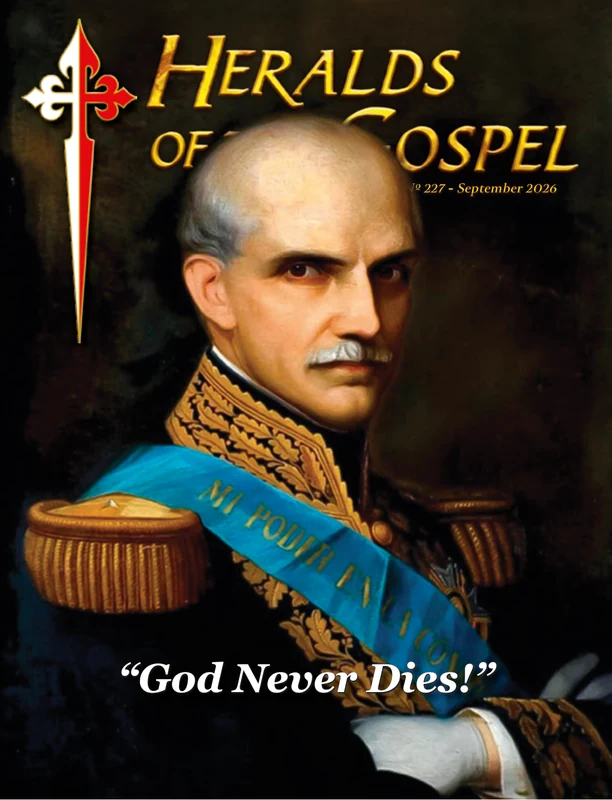
 Heralds of the Gospel Magazine, Vol. 20, nº 227, September 2026
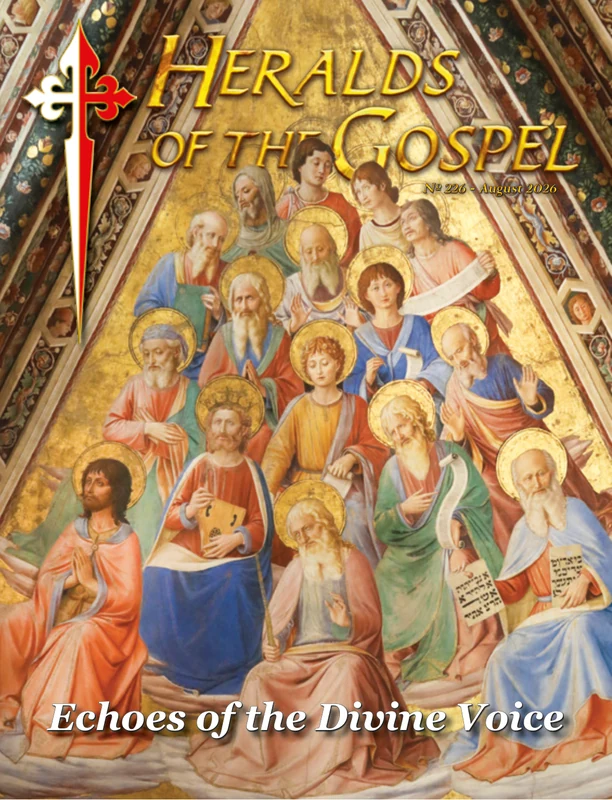 Heralds of the Gospel Magazine, Vol. 20, nº 226, August 2026
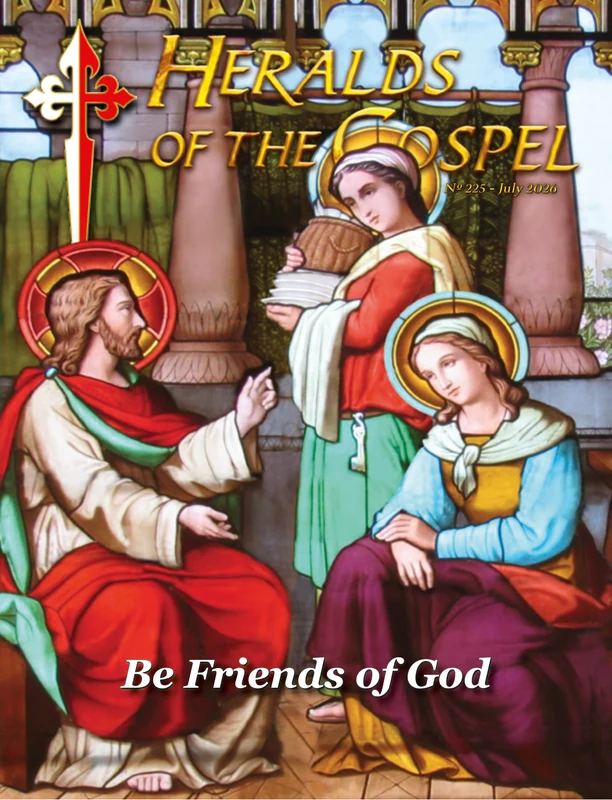 Heralds of the Gospel Magazine, Vol. 20, nº 225, July 2026
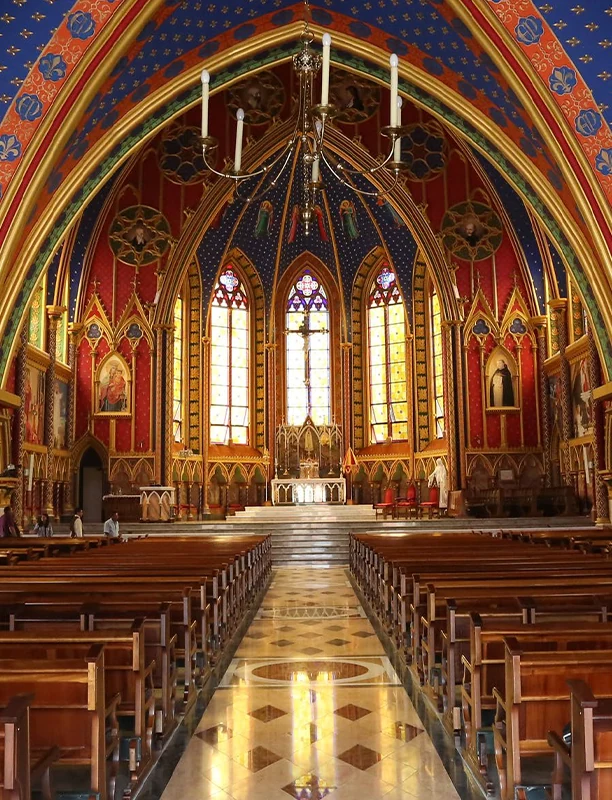 Who are the Heralds of the Gospel?
 Help of Christians
 Christmas Carols







 Sultan Suleiman - Palace of the Senate, Madrid.
The future of Europe in the balance
Forty years after the conflict in Rhodes, Suleiman returned to attack the Christian domains through his representative Mustapha, this time on the island of Malta. However, what he did not expect was that he would find at the head of the opposing troops a chosen soul, whose faith and valour were worth incomparably more than all his human strength. “In the spring of 1565, the Grand Master [La Valette] was seventy years old. Behind him lay a lifetime’s unbroken service to the [Hospitaller] Order. Uniquely among Knights, from the time he donned the Order’s tunic at the age of twenty, he never returned to his family home in France. He had given everything to warfare in the name of Christ; he had been badly wounded in a fight with Barbary corsairs; had been captured and spent a year as a galley slave.”2 But he never allowed himself to be overcome by difficulties, for he was imbued with a deep faith in his mission. Like all of Christendom, he was well aware of the importance of the island of Malta in stemming the Ottoman advance: if the enemy conquered it, Europe would be exposed to invasion and massacre. On being warned, therefore, of Suleiman’s imminent attack on this strategic front, he understood that the fate of the Order of St. John and even of the West lay in his hands. The sultan, with delirious presumption, sent his powerful army to the island: one hundred and thirty galleys, thirty galleons, nine transport barges, ten large galleons, two hundred smaller transport boats and about twenty-four thousand combatants – six thousand of whom were part of his elite troop known as the janissaries. His entire fleet was a rich spectacle: ships adorned with carvings, standards, red and white flags, and carrying sumptuous silk and brocade tents. La Valette had approximately eight thousand men, only five hundred of whom were Knights Hospitallers, to whom were added some Maltese peasants. And to increase their plight, the island’s fortresses had long been in need of repair. “An untenable situation!” some would conclude. The Grand Master, however, knew that having nothing, he possessed everything: fighting with scarce human resources, he would receive victory from the hands of the Almighty, who was watching over them.Loyalty or capitulation?
At dawn on May 18, the sentries spotted sails on the horizon. Warning shots were soon sounded, along with drums and trumpets, and fire signals spread the news all over the island. The civilian population took refuge in the fortifications, while the fighters took up their posts. Around midday, the defenders beheld a terrifying spectacle, as one of the witnesses recorded: “Fifteen or twenty miles from Malta the Turkish armada was clearly visible, all in sail, so that white cotton sails covered half the horizon to the east.”3 The Siege of Malta - Palace of the Grandmaster, Valletta (Malta)
Idealism tried in blood
A few days after his capture, La Rivière – who had probably already been tortured – was taken, on Mustapha’s orders, to the top of a hill where he could see the Catholic defences. Under enticing promises of freedom, they invited him to reveal the vulnerable sectors. He indicated two positions. Accordingly, Mustapha had his army advance on the places indicated to test them. Noticing the approach of the enemy, the Christian warriors took up their positions. La Valette knew that his men were burning with the desire to confront the invaders, so he decided to grant them this opportunity. He waited until the Turks came within firing range, and then he had seven hundred riflemen advance, accompanied by a detachment of cavalry. He had to keep his lance in his fist to restrain the remaining soldiers, otherwise no man would have remained at his post, such was their ardour! After five hours of fighting, the Catholics had driven back their enemies with such fury that they had even threatened the life of the Grand Vizier himself! The latter, realizing that the brave La Rivière had led him into an ambush, had him beaten inhumanely until he died. Thus departed for eternity that man of incomparable generosity, whose heroism moved God, as well as Catholics of all times. Without a doubt, his fidelity bought for Christ’s adversaries a defeat even crueller than his death had been, and for Christians, a triumph even more beautiful than his martyrdom!Resisting until the impossible
The battle, however, was far from over. La Valette had to persevere against all hope in this very difficult resistance for more than three months, under unrelenting enemy fire, while waiting for his many requests for reinforcements to be answered. In the midst of these battles, the soldiers and the Maltese population never ceased to implore divine intervention, with processions, prayers and fervent attendance at the Sacraments. It was not until September 7, the eve of the feast of the birth of Our Lady, that the longed-for help arrived. On that day a battalion of ten thousand men landed on the Maltese coast from Sicily under the command of Don García Álvarez de Toledo. Up to that moment both armies were exhausting their last resources and only the strength of La Valette kept the defenders alive; with the arrival of help, however, great hope flooded the hearts of the Maltese, while the enemies were seized with dread. Don García Álvarez de Toledo and his troops disembark in Malta - Palace of the Grandmaster, Valletta (Malta)
Finally, the well-deserved victory
The awaited day dawned. Once again, those two gazes once present at the Siege of Rhodes came face to face. However, this time the Catholics had not the slightest intention of making agreements or surrendering; they were convinced, by divine grace, that souls who love with their whole hearts cannot collude with evil. With the help of the Lord God of Hosts, the defenders of the Faith advanced, reaching an advantageous position before the Muslims. It was the top of a hill, and there they planted their standards. A fierce battle then began! “Mustapha’s decision to attack was now shown to be a terrible error of judgement. The Christian force was larger than the [traitor] had claimed – and they were far fresher than the Muslims, who had been in the field for four months. The Ottomans started to waver.”5 Despite Mustapha’s insistent efforts to keep his soldiers in the fight, the impact of the Maltese against the enemy ranks provoked their final rout. The insolent maligners of the Faith fled in disarray. “The End of the Siege of Malta”, by Charles-Philippe Larivière - Palace of Versailles (France)
Let us imitate his magnanimity!
The saying goes that “a strong king makes a weak people strong.” In the incredible story of the Siege of Malta, it is safe to say that behind the bravery and perseverance of the Catholic troops lay the virtue of La Valette. More than shouting orders and exhortations, he was for the soldiers the living example of the intrepidity and unconditional faith that would gain them victory, and his strength in confrontation with difficulties made the fragile resistance of his men invincible. La Valette was a peerless man, for a man’s greatness is measured by what he defends, by what he loves and by what he believes; and the fearless Grand Master defended, loved and believed in the Catholic victory whose fate rested on his shoulders. ◊Notes
1 The historical facts contained in this article are taken from the work: CROWLEY, Roger. Empires of the Sea. The Final Battle for the Mediterranean, 1521-1580. London: Faber and Faber, 2008.
2 CROWLEY, op. cit., p.106.
3 Idem, p.144.
4 Idem, p.116.
5 Idem, p.192.
6 Idem, p.193.